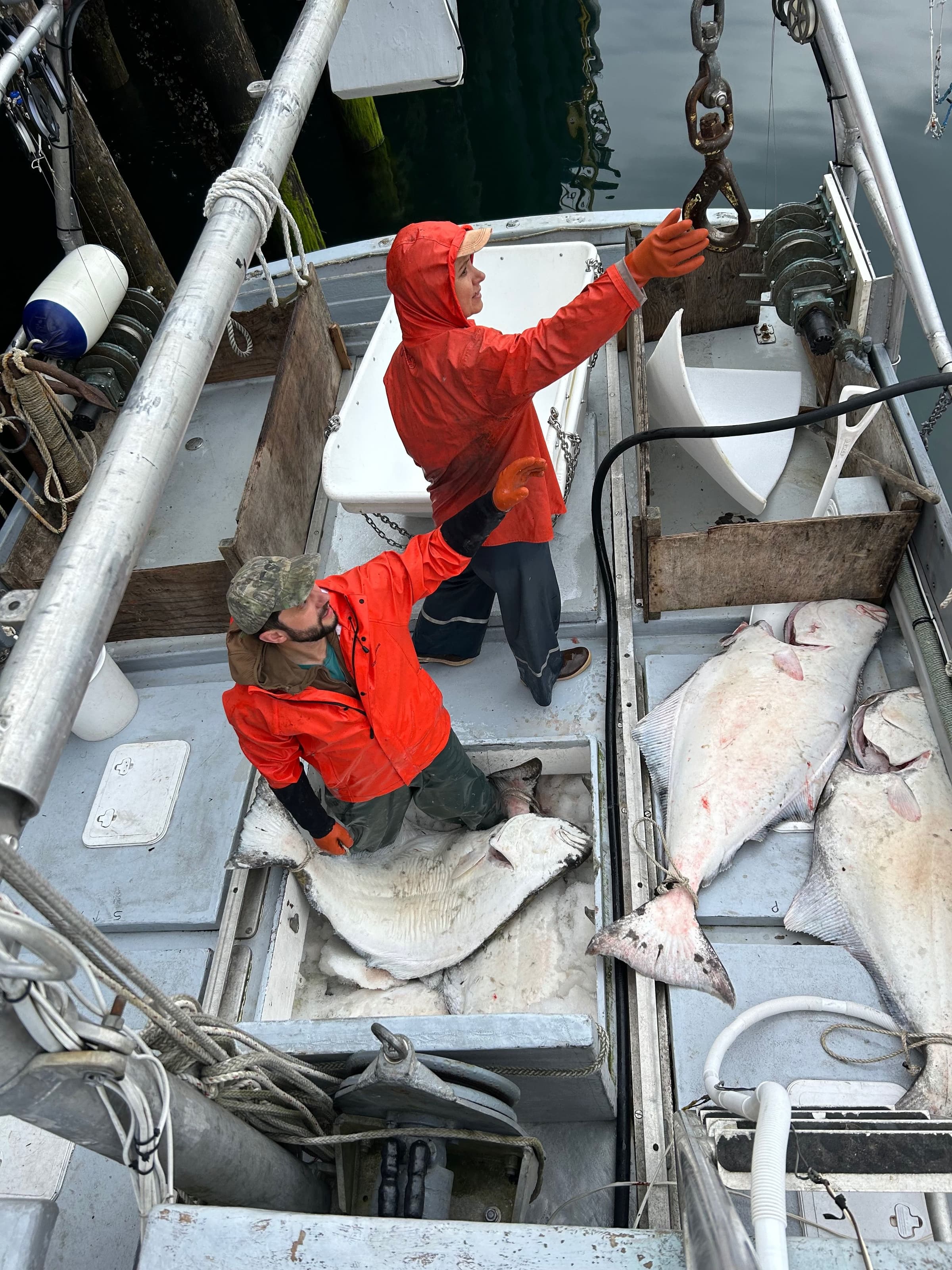
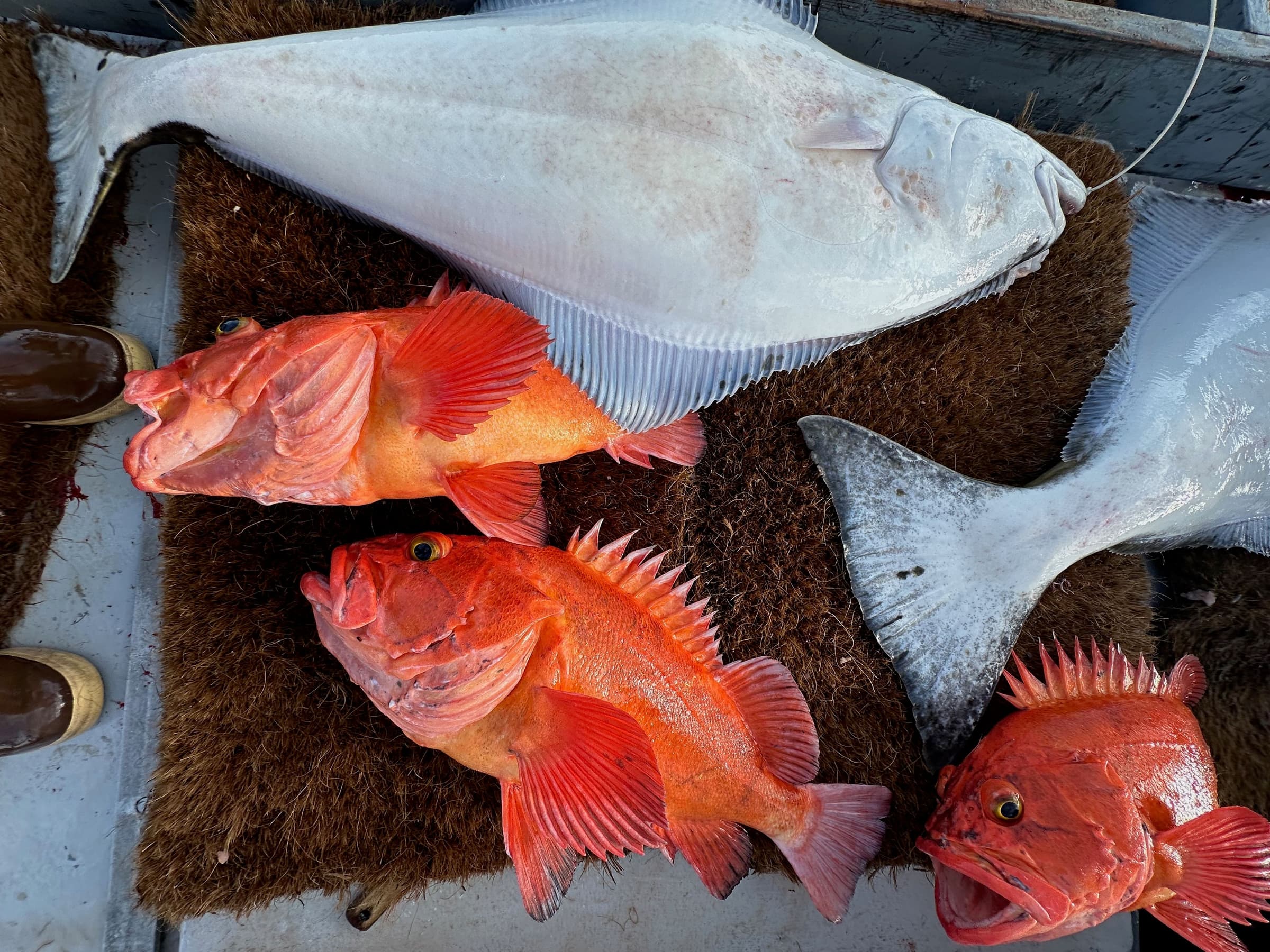
In Alaska’s legendary and productive fishing grounds, there are many ways fishermen harvest seafood. Do you know the difference between a troller and a trawler? Understanding how our seafood is harvested helps inform your choices and which fisheries you choose to support with your dollars.
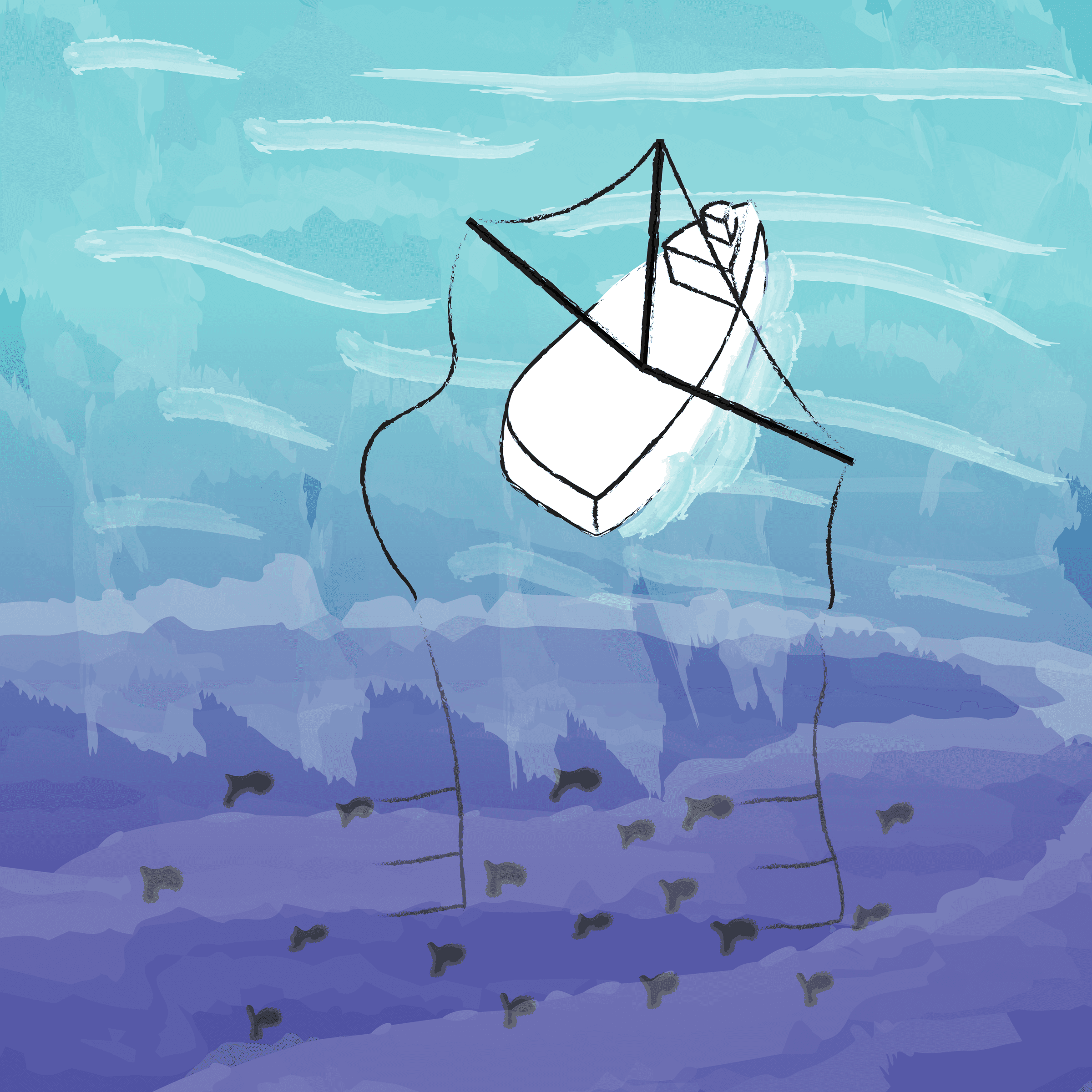
Last month we discussed catching halibut on hook-and-line and black cod using a mix of longline and pots. Trolling — dragging baited fishing lines (with hooks or lures) through the water, usually behind a moving boat.These gear types minimize damage to the ocean floor where they’re used and allow fishermen to release bycatch alive. They also offer the advantage of handling each fish individually, so it can be bled promptly and iced to preserve its quality.
Unfortunately, for fish populations worldwide, there are faster, more efficient ways to harvest seafood. Trawling — dragging large nets through the ocean — is one of them. In Alaska, there are two main types: bottom trawling, where nets drag across the seafloor, and pelagic trawling, where a cone-shaped net targets schooling fish in the open water column. Both methods are highly efficient and can yield large catches quickly in productive habitats like the Gulf of Alaska or the Grand Banks. The problem is that, without strict management, trawling can decimate fish populations. This pattern helped drive the Grand Banks cod collapse in the 1970s and 1980s, prompting a moratorium in 1992 and ongoing recovery — lessons that underscore the importance of the science-based management and enforceable sustainable practices in Alaska.
Within these management contexts, some oversights threaten small-boat fishermen, subsistence users, and Alaska Native cultural heritage. The largest is bycatch from the trawl fleet, where millions of pounds of halibut and black cod are discarded each year. In the bottom-trawl fishery — particularly in the Bering Sea, which is a nursery for small halibut — protected habitats exist to guard halibut populations. But these protections don’t fully shield halibut from bottom trawling because they aren’t the target species. This illustrates the delicate balance needed when managing different gear groups that are often in tension. Halibut bycatch is counted by weight, so many small fish killed in the Bering Sea can still harm halibut stocks statewide.
Bottom trawling not only yields bycatch on a massive scale but also damages habitat by scraping and plowing the seafloor. This disturbs — and can kill — corals, sponges, and other organisms that form essential bottom habitats. Repeated tows reduce habitat complexity and can crush uncounted crabs and other organisms that aren’t caught in nets. Large clouds of stirred-up sediment further disrupt the seafloor environment. Every year, this method stirs up 22 gigatons of sediment, as much as all rivers deposit on continental shelves. That chokes out the base of the food web and permanently changes these ecosystems.
Pelagic, or midwater, trawling also produces significant bycatch. Although these nets are described as midwater — targeting pollock that often swim near the seabed — North Pacific Fisheries Management Council (NPFMC) data indicate midwater trawls contact the seabed 40–80% of the time, and sometimes drag along the bottom. These nets catch unwanted salmon and other species and can cause bottom damage. For more detail, see the Alaska Marine Conservation Council article. While pollock bycatch is generally a smaller share than bottom trawls, tens of thousands of king salmon and hundreds of thousands of other salmon are still affected.
Beyond environmental impacts, there are practical reasons to favor small-boat fisheries over industrial trawling. Alaska’s residents broadly support bans on trawling across party lines; a national fisherman survey showed 70% in favor of banning pollock trawling. Many trawl fleets aren’t Alaska-based. Amendment 80 vessels, for example, are Seattle-based and process their catch at sea, which limits benefits to Alaska’s shore-based communities. Small-boat fishermen tend to be invested in the long-term health of the ecosystems where they fish and the communities that support their livelihoods. In contrast, large corporate trawlers often extract resources and move value out of state, leaving significant bycatch and habitat damage in their wake.
Here at Sitka Seafood, we support small-boat fishermen and the community processors across Alaska. These fishermen harvest seafood with care and protect ecosystems for the future. Next time you’re in a seafood market, ask how the fish was caught and choose to buy fish that wasn’t industrial trawled, helping keep our oceans healthy and our coastal communities strong.